What will become of early careers? Are we looking at the end game for newcomers to the job market? Will young people forever be consigned to a hinterland of NEET, caught in a Catch 22 situation of not having the right experience or skills for employers to take them on, and not having the opportunity to earn that experience or those skills?
Well, not necessarily.
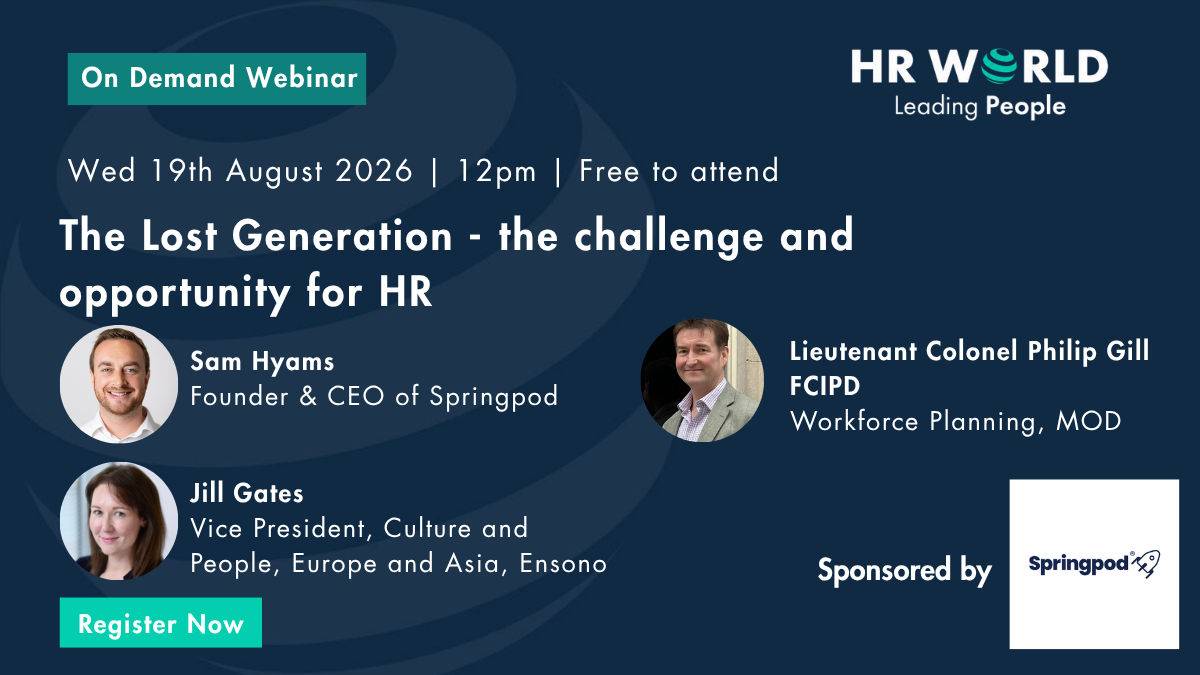
In a webinar from The HR World in association with Springpod and featuring Sam Hyams, Founder & CEO of Springpod, Lieutenant Colonel Philip Gill FCIPD, Workforce Planning, MOD and Jill Gates, Vice President, Culture and People, Europe and Asia, Ensono, it became clear that organisations are well aware of the challenges currently facing early years talent, and are adapting in order to ensure heir early talent pipelines are still very much functional.
According to Philip Gill the army is still fortunate to be able to recruit according on individual’s potential and then invest in giving them the skills they need to succeed going forward. Similarly Ensono consider applicants in their entirety, picking up on their enthusiasm, dedication and commitment to work as demonstrated through extra curriculum activities as well as general performance. At the same time as Sam Hyams pointed out, there are increasingly innovative and diverse ways in which organisations are able to make initial contact with new young talent through virtual work placements and career exposure. All these activities offer vital work experience opportunities which individuals may otherwise find difficult to come by.
The increasing emergence of AI and related technology featured heavily in the discussion although alongside the idea of technology replacing previous jobs for new starters there was the idea that the current influx of early career applicants are digital natives so can bring skills and attitudes to the workplace which existing staff can learn from in order to get the most from evolving technology.
The panel also address the need to provide appropriate support and understanding to early careers candidates as they make the transition into the workplace. An appreciation both of neurodiversity and the mental health challenges associated with regular working life means organisation are better placed to get the most from their new recruits in the short and longer term.
The HR World’s webinar The Lost Generation – the challenge and opportunity for HR, is well worth a view to understand the current state of play for early careers and for organisations looking to ensure their own career pipeline remainseffective in these turbulent times.