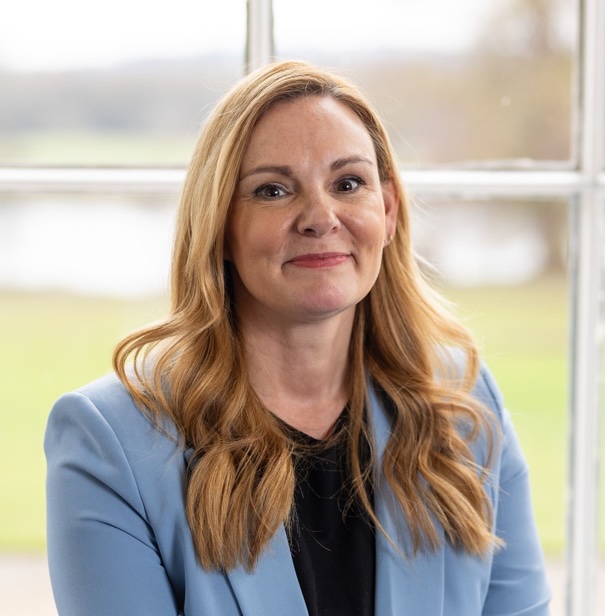
Ernesto Marinelli, Chief People Success Officer, at AI-centric, SaaS-based insurance software company Sapiens believes that automation, content overload, and on-demand skills mean organisations need people who can judge well and think broadly.
The agentic AI revolution changes so much about how we select and foster people that many of the old rules HR has lived by will be consigned to history. A quantum leap forward from the first generation of generative AI models such as ChatGPT, agentic AI brings together swarms of bots to re-engineer processes and create end-to-end solutions to even the most complex business challenges. Both HR and the people we hire will need different skillsets and mindsets for a world where bots can do so many of the organisational tasks better and faster than humans can.
To crystallise what I am talking about in making this rather audacious claim, let me introduce the four emerging forces needed to drive what I call the new autonomous enterprise.
First, values. We need people with an innate sense of values to parse and judge the torrents of data and counsel generated by AI prompts. For years, we thought that values were stable and unchanging. That is no longer the case.
Second, the ability to manage transformation, or evolution. We will need people capable of managing tumultuous waves of change and unpredictability.
Third, collaboration. We will need a new collective way to co-create and co-curate because AI gives us so many of the building blocks to do what teams used to do.
Fourth, the emancipation of the individual in an era that demands smart thinking and individual actions rather than the old model of ‘you may do this’ empowerment and delegation.
The question is not what AI can do. The question is what humans become when the transactional is lifted from their shoulders.
These four forces share one premise, and it is worth stating plainly: the autonomous enterprise does not exist to remove humans from work. It exists to elevate them within it. Renaissance humanists understood something we are at risk of forgetting: the dignity of the human being lies in self-determination, in the capacity to make of ourselves what we choose. AI is the most powerful instrument we have ever built. But an instrument is all it is. The question is not what AI can do. The question is what humans become when the transactional is lifted from their shoulders. My answer: they become what they always were underneath the task lists. Judges. Creators. Meaning-makers. The autonomous enterprise is not a machine with humans in the loop. It is a human enterprise with machines in service.
Wanted: New skills
These four forces will, in turn, change many cherished tenets of classical HR and who we select.
High-potential individuals, intellectual horsepower, speed in learning or learning agility will be depreciated. Judgment and contextual understanding will be prioritised because of the sheer volume and velocity of data that will be thrown at us. Separating the wheat from the chaff will be prized because there will be so much fake, out-of-context, hallucinatory and superficial information that if we can’t make the right judgment calls, we will be overwhelmed and led to making bad, even dangerous, decisions.
We will need to prioritise ethical agency. The AI-fed world is changing so rapidly that regulators – and even the other rule-setters like political or religious leaders – can’t keep up. That means that the old carrot and stick of moral codes and penalties become complex and lagging. We will need people who understand that fast and decisive actions that run counter to ethics may lead us down a wrong path. Without a human in the loop to check AI, we risk downstream reputational damage to our organisations and detrimental impacts on the world outside them.
We need the collective brain of everybody to solve the most complex problems for our customers.
We will no longer be so dependent on ‘makers’. So much of the history of capitalism is based on people seeing a gap in the market and filling it with a product or service. AI will flatten out that competitive differentiation ability and let everybody analyse and act faster.
We are going through a systemic shift in HR and organisational planning. In the past, we've talked about flat organisations and how hierarchies are going to go away. Taylorism taught us that if you take an elephant, you cut it into small pieces and everybody has their own piece to eat. That was the fastest way to execute a complex project. Today, that is no longer possible and we need the collective brain of everybody to solve the most complex problems for our customers.
The new problems are more complex than teams of individual specialists can manage, so we need a new form of collaboration to address gaps. Many of these will be areas that we haven’t yet even thought about, such is the speed of change. The conundrum we face is that the world is moving faster than ever and will never be as slow as it is today. So, we need a collective brain where individuals share knowledge and create outcomes beyond what the individuals therein would have managed working alone or in isolated tasks within a group.
Old and young people; #-shaped, not M-shaped
What sort of individuals will be a good fit for the AI age? In recruitment, we often started with I-shaped specialists, then T-shaped people who had the specialisation plus a broad set of complementary skills. In the last 15 years, we have seen the limitations of T-shaped people and we have admired M-shaped people who have multidisciplinary skills plus holistic thinking to go up and down sequential tasks.
The next wave of premium people will have such a new set of skills that I can’t even apply a prefix letter but call them ‘hashtag people’ or ‘# people’. These individuals have all the M-shaped characteristics but also a matrix, intersecting mindset that understands the dependencies of soft and hard factors, of short-term and longer-term opportunities, and the ability to manage through changes without pausing.
Young people may be used to ChatGPT or Claude, but they will need a lot of time to learn judgment.
Another big change for HR: continuous learning, as we have practised it, is ending. Not because learning ends, but because it rises. For decades we treated learning as accumulation: acquire the skill, certify it, move to the next module. That was Taylorism applied to the mind. AI now absorbs the transactional layer of learning entirely. You have a situation that is new to you? Ask Claude. What remains for humans is the layer no model can complete on our behalf: formation. The Germans call it Bildung. It is the cultivation of judgment, the trained capacity to read a context, weigh what matters, and decide. Judgment is not downloaded and it is not hired. It is built through exposure, reflection and consequence. This is why organisations will need to become gymnasiums of judgment, deliberately training the one capability that grows more valuable as everything else gets automated.
Some say that the AI age will belong to AI natives, but I disagree, at least in the near term. There will be a period in which we will continue to hire more people that are senior because of that requirement for judgment I mentioned earlier. Young people may be used to ChatGPT or Claude, but they will need a lot of time to learn judgment.
Also, colleges will take time to teach them things that are not in the classic business case studies. In the new world, where everybody is enhanced by AI, I can write in English like a native speaker because I put my thoughts into a frontier model and it will write it back like a journalist and structure my thinking even.
So much is changing so fast that I will surely be wrong on several points here. That is fine. Being wrong and correcting course is precisely the judgment I am arguing for. But on the central point I am confident: the AI age is not a story about technology. It is a story about people, finally released from the tasks that made them small. HR’s job in this era is not to manage the transition. It is to lead the elevation. That is a different mission, and it deserves a different name. We call it People Success: a function that stops asking how humans stay relevant to machines, and starts asking how machines make humans more fully human.