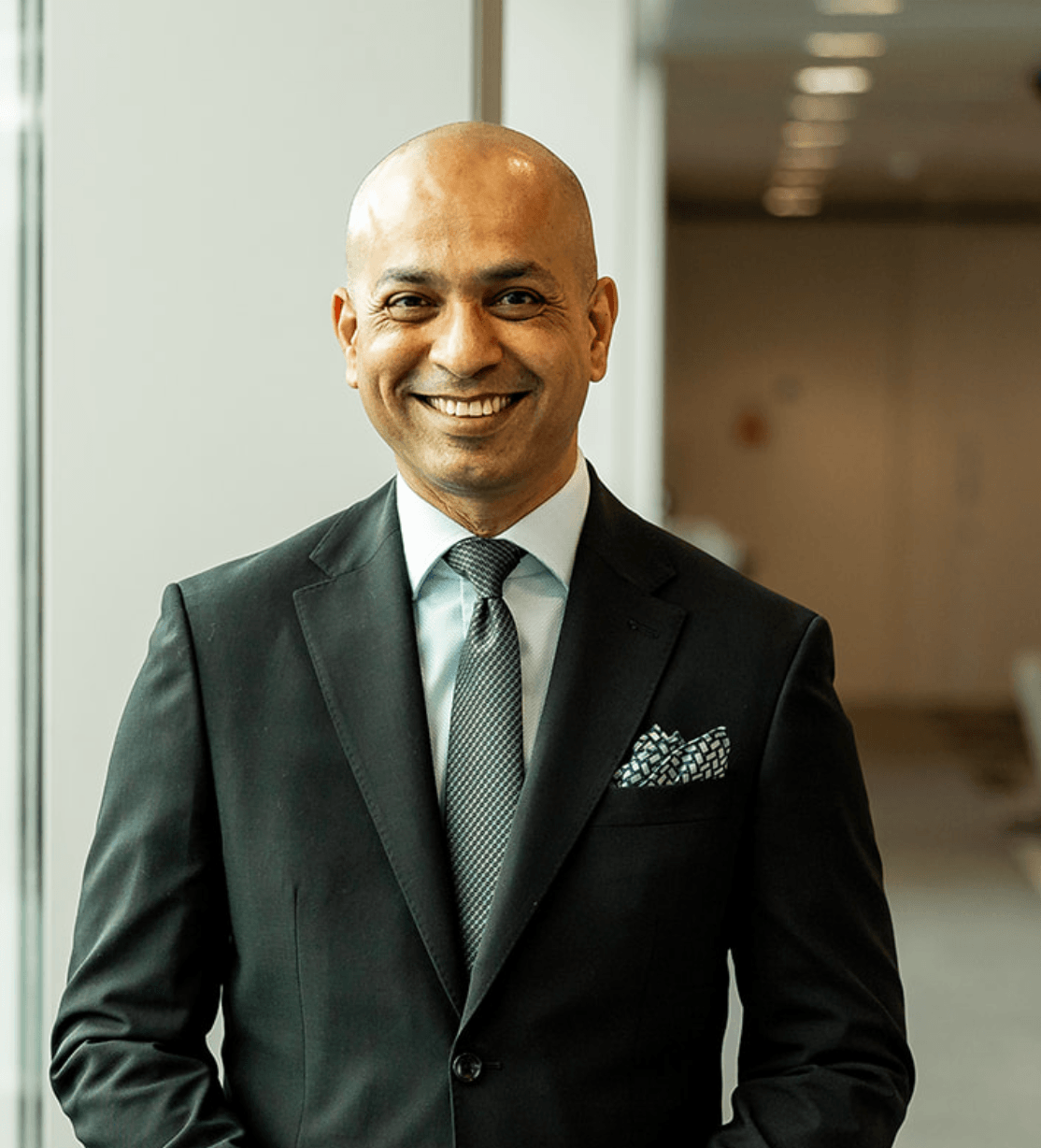
Dr. Zaheer Ahmad MBE, Head of Unifying Culture at BDO and Diversity, Equality & Inclusion Expert Panelist for The HR World says DEI does not need more noise. It needs more impact.
Diversity, equity and inclusion is entering a more consequential phase of its evolution.
The environment around it has undoubtedly changed. Public discourse is more contested, organisational scrutiny is greater, and assumptions that might once have gone largely unchallenged are increasingly being questioned. For some, this represents an unwelcome backlash. For others, a long-overdue correction.
I am not convinced either interpretation, on its own, is particularly helpful.
Having worked in this field for many years, I remain firmly committed to the fundamental proposition that people should have a fair opportunity to contribute, progress and succeed at work. But commitment to that principle should not require unquestioning loyalty to every practice, convention or orthodoxy that has developed around DEI.
If DEI is to remain credible, relevant and effective, it must become more rigorous, more discerning and more comfortable with scrutiny. The next stage cannot simply be about demonstrating commitment. It must be about demonstrating consequence.
“People rarely experience workplaces through a single dimension of themselves.”
There is an important distinction between organisational activity and organisational change. Visibility can create momentum and commitments can signal intent, but neither tells us whether the underlying conditions of a workplace have materially changed.
The more demanding questions are different.
Which factors are structural, behavioural or contextual? Where has action produced meaningful improvement? Where has progress remained stubbornly static? And are we prepared to reconsider our assumptions when the evidence does not support them?
Changing course, not retreat
Changing course should not automatically be interpreted as retreat. Equally, persistence should not automatically be mistaken for conviction. Sometimes the responsible response is to acknowledge that an approach has not delivered what was intended and think again.
That is not the abandonment of DEI. It is organisational maturity.
Fairness, not false simplicity.
I increasingly find myself returning to the concept of fairness.
Organisations are made up of people whose experiences are shaped by multiple factors: background, identity, education, socioeconomic circumstances, geography, caring responsibilities, health, opportunity and personal choices. People rarely experience workplaces through a single dimension of themselves.
Yet there is a risk that DEI, in attempting to understand inequality, can impose an artificial simplicity on that complexity. Categories are valuable for identifying patterns and disparities, but they are analytical tools; they are not complete descriptions of human beings.
We should be capable of recognising patterns of disadvantage without assuming uniformity of experience. We should be able to pursue greater equity without suggesting every disparity has a single explanation. And we should improve opportunity without creating a narrative in which fairness becomes a competition between groups.
For me, equity is not about engineering predetermined or identical outcomes. Nor is fairness synonymous with treating everybody identically regardless of circumstance.
It is about understanding where irrelevant barriers distort opportunity and being sufficiently sophisticated to address them. That requires judgement rather than ideology.
Inclusion should become less exceptional
The ultimate success of DEI should not be measured by how prominent the DEI function becomes. Arguably, it should be measured by how deeply its principles become embedded in the ordinary architecture of an organisation.
Culture is shaped through thousands of accumulated decisions: who receives consequential opportunities, whose potential is recognised, who receives candid timely feedback, who has access to influential relationships, whose contribution is visible.
These are not peripheral questions of inclusion. They are questions of leadership and organisational effectiveness. This is why inclusion increasingly needs to be understood as an organisational capability rather than a specialist intervention.
DEI professionals have an important role in interpreting evidence, identifying patterns, exposing blind spots and providing constructive challenge. But specialists cannot manufacture an inclusive culture on behalf of an organisation. Ultimately, leaders do that.
Intellectual diversity matters too
Perhaps one of the more difficult challenges facing the profession is how it responds to disagreement.
Not every challenge to DEI is well founded. Some criticism is ideological, poorly informed or deliberately provocative. But it would be equally problematic to assume that every uncomfortable question represents hostility to inclusion.
There are legitimate debates about fairness, proportionality, evidence, language and unintended consequences. A mature profession should not be threatened by those conversations.
If we believe diversity of perspective strengthens organisations, we should be prepared to apply that principle to our own thinking. That means distinguishing evidence from assertion, listening carefully enough to understand the substance beneath disagreement and occasionally accepting that someone asking a difficult question may have identified something we have overlooked. There is a difference between defending the purpose of DEI and defending every manifestation of it. We should be confident enough to know the difference.
The next chapter
For me, this is where the real test of organisational maturity begins. Ambition matters, but ambition without substance, evidence and a clear understanding of impacted has limited value.
What problem was the organisation seeking to address? How well did it understand the underlying causes? What evidence informed its response? What changed as a consequence? Was that change sustained? And what did the organisation learn when reality proved more complicated than anticipated?
DEI will continue to evolve. Terminology will change. Political and social attitudes will shift. Some established approaches will endure; others will rightly disappear. The profession itself will need to become more evidence-led, commercially literate and organisationally sophisticated.
I see that as an opportunity.
Because beneath the terminology sits a much more enduring proposition: talent should not be unnecessarily constrained by barriers unrelated to capability, and organisations are stronger when people can contribute fully and fairly.