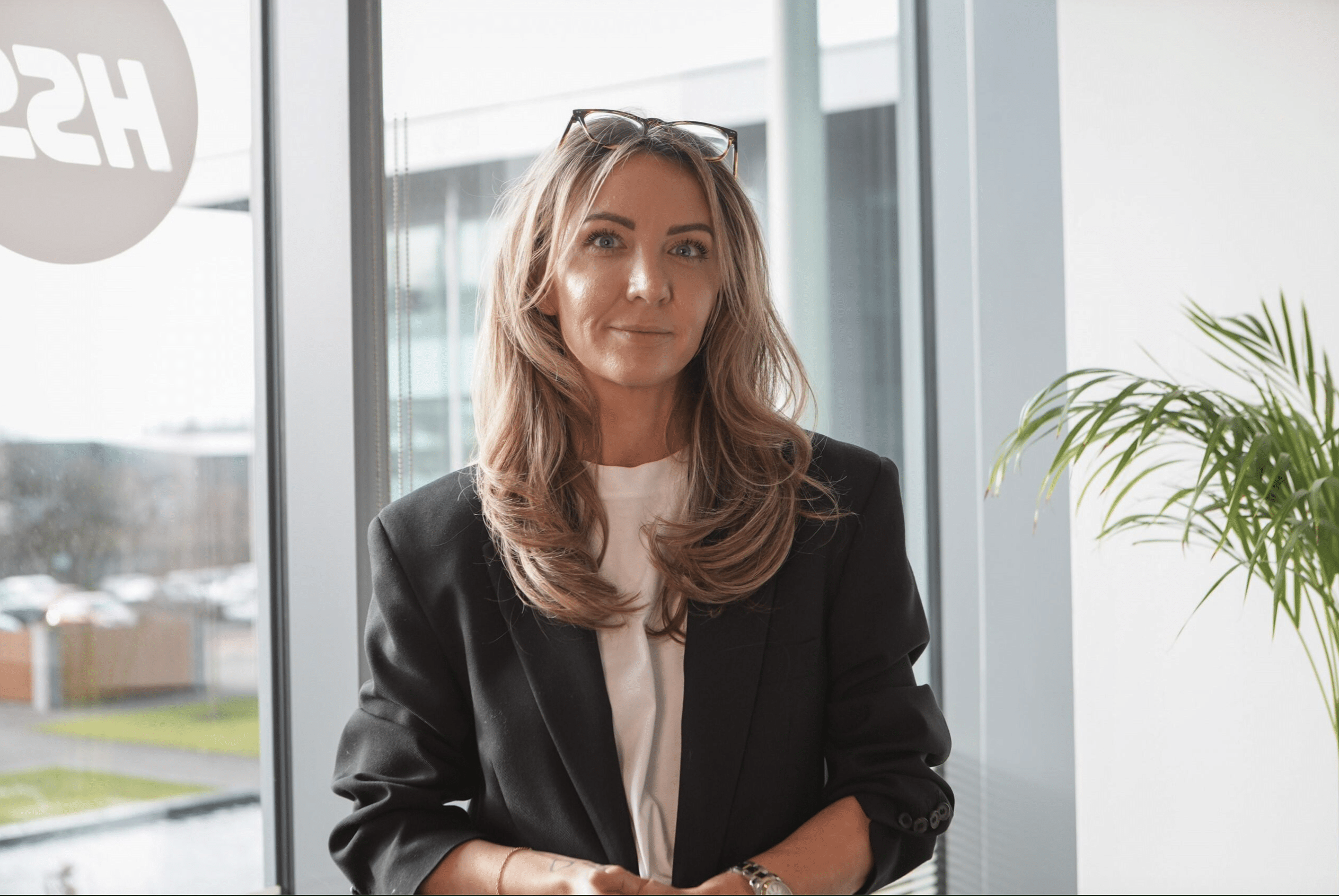
From a career that started in retail and hospitality, Kayleigh Wright – HR Director at HSS ProService Marketplace, a building services platform that connects buyers and sellers, has built a strong and impactful role in an ever-changing business.
Q: Please give a short guide to your career
A: I studied history at university, and all the way through my degree I worked full time in retail and hospitality. That naturally led me into retail management/area manager roles when I graduated. I progressed quite quickly and was managing people fairly early in my career.
After a period of reflection about what I really wanted to do, I narrowed it down to HR or marketing, with a brief flirtation with becoming a history teacher. I even spent a week shadowing my old history teacher and very quickly realised that wasn’t for me.
A close friend of mine at the time was an HR Director, and over a glass of wine she talked me through what her average week looked like. I found it genuinely inspiring and decided I wanted to give HR a go. I had no HR experience and no CIPD qualification, so my original plan was to go into an external recruitment agency to get a year’s experience, move into internal recruitment, and then transition into HR.
I spent two months in external recruitment before being offered the opportunity to join HSS in recruitment. I was actively reaching out to internal recruitment teams across the North West at the time, and a friend recommended HSS. I joined, spent six months recruiting full time here – around 2014 – and then an opportunity came up within the HR team.
After six months in recruitment, I moved into HR, started studying for my CIPD, and stepped into a frontline HR advisor role. That move from recruitment into advising on HR issues was one of the most challenging transitions I’ve made professionally – it was a steep learning curve in a discipline I had no formal background in.
From there I progressed to HR Business Partner – which is probably one of my favourite roles – and then into a Head of HR role, and eventually into my current position as HR Director. I’ve been with the organisation for around 12 years, and all of my HR experience has been built here, from the ground up.
Q: What have been some stand‑out achievements?
A: One of the clear stand‑out achievements for me is the business separation and disposal project last year.
It was a large‑scale, complex corporate transaction involving multiple businesses and hundreds of colleagues. When the project was first briefed, it felt almost alien in its scale.
From a people and TUPE perspective, the challenge was enormous: crafting processes that were legally compliant, fair to colleagues, well‑timed, and well‑communicated, while coordinating with other HR and communications teams across different organisations. There were nights when we were still working at 11pm, just continuing the day.
What I’m most proud of is that we didn’t default to a minimal, tick‑box compliance approach. We put a huge amount of emphasis on empathetic, clear, and timely communication, recognising that these changes carried a significant emotional impact for hundreds of people. We worked hard to over‑communicate where necessary, maintain consistency of message across three businesses, and ensure colleagues were supported throughout.
It was all‑consuming at times and felt, on occasion, almost unachievable – but we got it over the line. It’s a major professional milestone for me.
On a personal level, that project also stands out because it happened around 10 months after I returned from maternity leave. Balancing the demands of a large‑scale corporate transaction with being a working mum for the first time added another dimension to the challenge, and I’m proud of how I managed both.
Q: What attracted you to HR?
A: Like many people who end up in HR, I do genuinely enjoy working with people – but for me it goes a bit deeper than that.
In my early retail and hospitality management roles, I found myself leading teams without really being given the tools or guidance on how to do that well. I enjoyed the job, but there was a point where I realised I was responsible for a team of people and was essentially figuring it out as I went along. I didn’t always get it right.
That integration between people and commercial performance is a big part of what continues to motivate me.”
When I sat down with my friend who was an HR Director, she talked me through what she was responsible for as a senior HR leader and the impact HR can have on culture, leadership capability, and the management population in a business. It was clear to me that this was exactly the gap I’d been feeling in my own development as a people manager.
That conversation opened my eyes to HR as a function that equips managers, shapes culture, and has a meaningful influence on how people experience work.