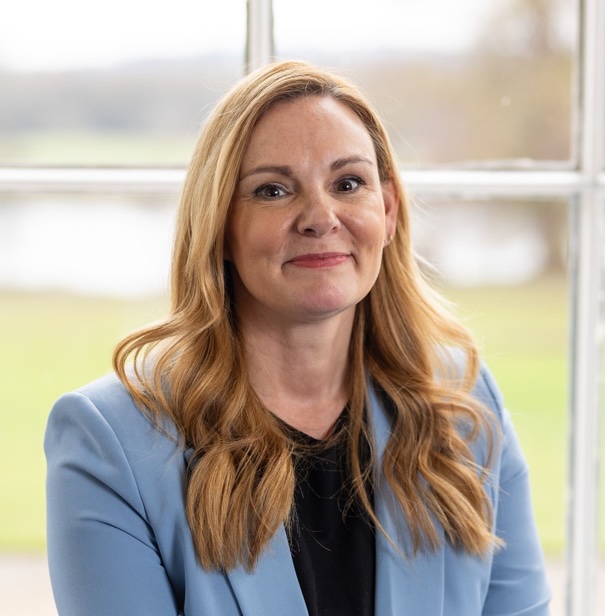
With a career that has led her through recruitment and across multiple business functions and diverse businesses, Gillian Mahon Group CPPO at Totalmobile Ltd shows how HR can lead from the top as her business develops and evolves.
Does HR still have something to prove? Surely after years of demonstrating how great people management has a direct impact on organisation performance that time has passed?
Gillian Mahon Group CPPO at Totalmobile Ltd has been in the profession for most of her adult life and has seen the perception of the role change as her career has progressed. Mahon herself has now reached the top table of her organisation and is contributing directly as the business grows, merges and evolves.
Now AI is entering the workplace, Mahon believes HR has another platform on which to build reputation and importance. “There’s this perception of AI as a technology rather than a capability,” she explains. “We have so much value to bring to those conversations.” For Mahon, understanding AI is no longer optional for people professionals. It is about understanding how technology changes tasks, skills and ultimately the way organisations work.
“You can’t replace human thought and creativity. It’s about really understanding your business and what customers want.”
Her perception of the possibilities and demands AI presents are a factor of her experience and career trajectory. With a business degree and a masters in HR management – known as personnel management when she took the course – her early career saw her working in recruitment for roles in IT, finance and at the senior end of organisations. Recruitment gave her an understanding of people and talent at different levels of an organisation but it also gave her sales skills, and an approach which still underpins the work of HR: “We’re always selling ideas and thoughts,” she points out.
Mahon first put her HR knowledge into practice when she took a six months’ maternity cover job at a multinational technology company. Five years later, she was still there.
She describes herself at this time as someone who said yes to everything. As a result she worked across Europe, building her knowledge in all facets of HR along the way. One of the most positive aspects of this time was the quality and diversity of people she worked with and those leaders who gave her the space for her to make mistakes along the way.
“It was an amazing opportunity,” she admits, detailing how the role gave her exposure to a multitude of experiences, people, challenges and countries. She worked with senior leaders, experienced different markets and saw first-hand how quickly organisations can change. She also realised that while HR was initially about people and managing their expectations and trajectories, being an HR leader also meant understanding the bigger picture: “I thought HR was about people and how fulfilling it would be to see them develop,” she says. “I was probably quite naive about it in the beginning.
“You learn how HR shapes the business,” she explains. “You have influence across cultures and leaders, you’re thinking about how to manage your capability offshore and what you can do on-shore. You’re thinking about how skills change in the business, how we change performance in the business and what we can do to inform business strategy.”
As part of the executive team at Totalmobile Mahon worked alongside the other directors during last year’s ownership change as Bowmark Capital sold the company to Five Arrows, the alternative assets arm of Rothschild & Co. She notes this experience has brought the leadership team closer together and has made the business even more ready for the current merger.
No Playbook
Perhaps unsurprisingly, given her experiences, Mahon notes that there is never a tick-box answer to what HR needs to do: “There’s no definite playbook in HR,” she says. “It’s about the business, the investors, the stakeholders and the people. What do we protect as we scale, grow and evolve? You build the playbook for the environment you’re in.”
Alongside this, Mahon believes great HR professionals need more than a passion for people. They need a hunger for the business itself. “The profession has evolved enormously,” she notes. “And it touches every part of the business.”
That philosophy is evident in her current role, where one of her biggest achievements has been building the people function from the ground up. The business has grown through seven acquisitions and is now navigating a merger, making the strength of the people team and its foundations increasingly important.
Demonstrating Value
The transformation has changed not only the size of the function, but how it operates. Her current HR team are focussed on demonstrating measurable value to the business, using metrics such as cost and time to hire, and moving beyond process for process’s sake. The result is a team she describes as full of pace and ambition, with a scalable foundation capable of supporting the next stage of growth.
But she also believes HR can sometimes become so focused on metrics, business partnering and results that they lose sight of the people they are supposed to support. The answer is not therefore to move away from commercial discipline, but to balance it with genuine care.
Currently Mahon is emphasising excellent communications around the business. As the merger continues she wants to be sure of employee sentiment and see that people feel heard. That includes visiting all offices, meeting employees and creating opportunities for people to come together.
“We see AI as a teammate, but not a replacement for a teammate.”
Having guided businesses through so much change, Mahon does not see AI primarily as a threat to jobs but another influence to manage into the business. She does expect tasks to change and she welcomes the technology’s ability to save time on certain activities such as sense-checking information, summarising key points and preparing presentations. However, human oversight will always be essential.
“You can’t replace human thought and creativity,” she says. “It’s about really understanding your business and what customers want.”
The value of a human being is often their ability to understand the context and choose the right solution because they understand the situation. Her vision is therefore not of AI replacing people, but of AI becoming a colleague, a teammate that helps people work more efficiently and spend more time on interesting, valuable work.
That philosophy will be increasingly important as organisations navigate very different reactions to AI. Some employees are excited by its possibilities, others fear it will eventually replace them. HR has a critical role in navigating that tension.
“We need a philosophy we can hold true to,” she says. “We see AI as a teammate, but not a replacement for a teammate.”
Mahon has always said yes to new challenges and now, with AI, she’s saying yes again.