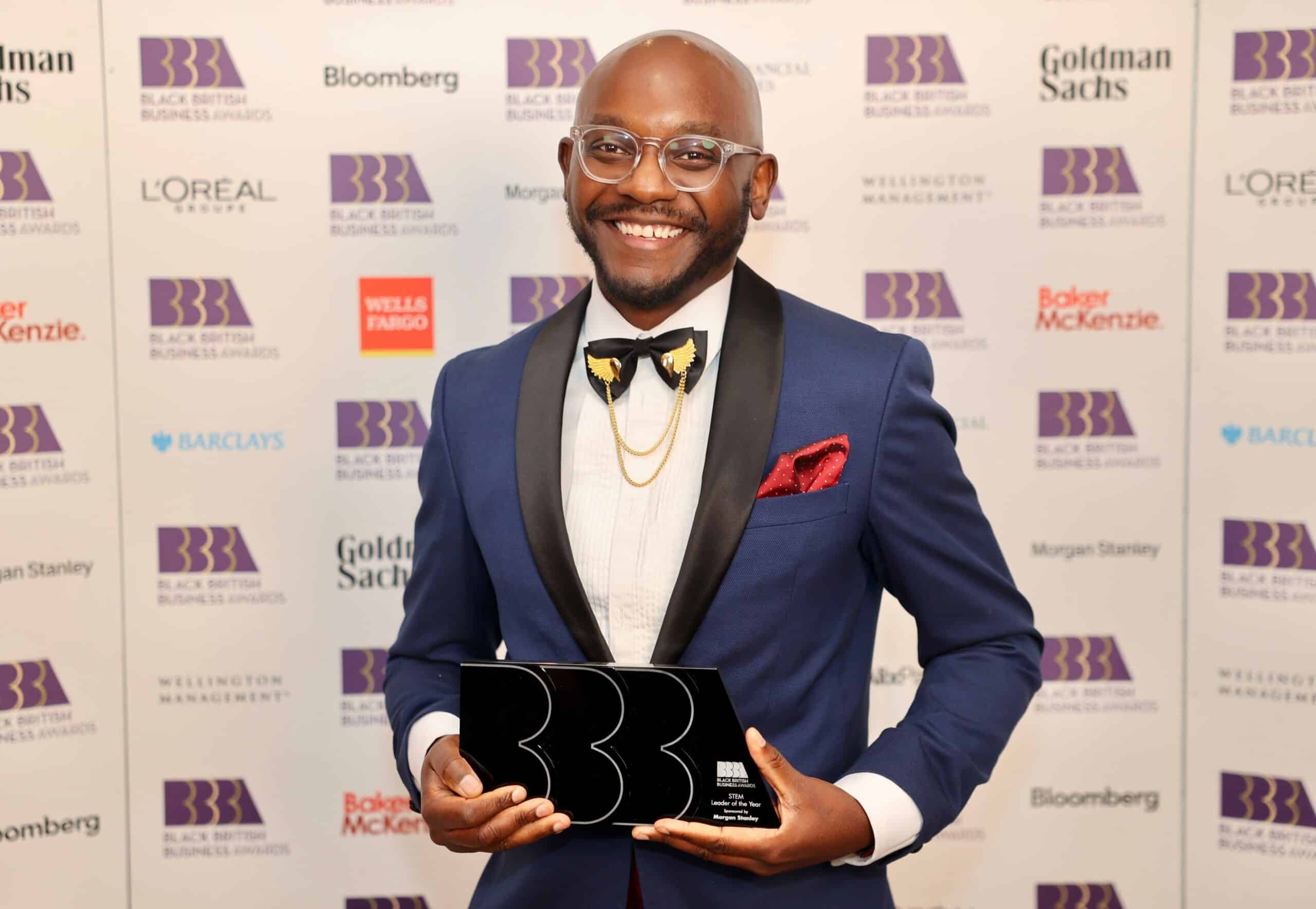
Dr Serufusa Sekidde, Chief of Staff to the CEO of ViiV Healthcare at GSK, leads the business transformation and performance acceleration for the HIV business. He has won multiple awards including the STEM Senior Leader Award at the Black British Business Awards, 2025.
In this piece Dr Sekidde is sharing his personal perspective based on his experience, rather than speaking on behalf of GSK.
Q: Please give us an example of a DEI initiative you’ve led.
A: I’ve worked on DEI across a few different contexts in the UK, the US and globally and in slightly different roles.
In the US, through my work with United States Pharmacopeia, I was involved in broader conversations around equity in healthcare systems and access, which gave me an external, system-level perspective.
In the UK, and more broadly within GSK, my focus has been on employee experience, culture and organisational change, particularly how you move DEI from something people talk about to something people actually feel in their day-to-day work.
From 2022 – 2025, I co-led EMBRACE, GSK’s global race and ethnicity Employee Resource Group (ERG). When I got involved, we were focused on scaling it from a relatively small network into a global platform for employee voice and practical change.
During that time, it grew from fewer than 5 chapters to over 20, with more than 3,000 members across 70 countries. But what mattered most to me wasn’t just the numbers. It was ensuring the ERG operated as more than just a community. We wanted it to be a reliable mechanism to surface issues, challenge things constructively, and connect the everyday employee experience directly into leadership conversations and decision-making.
Q: How did this project come about and how did you get involved?
A: For me, this work is personal. In Nov 2010, I was among a group of Harvard students who were kicked out of a Boston night club because we were Black. That was my inflection point, turning me into a vocal and visible social activist for racial, ethnic, and cultural diversity, equity and inclusion.
I promised myself I would never stand by the wayside again.”
We had gone to party after the Harvard-Yale football game that day and the night club believed there were “too many Black students, which would attract local gangbangers”. Vindicating us several months later, a court later ruled that was racial stereotyping and fined the club. In those few months while we were waiting for the verdict, there were anecdotal reports that many Black students were deeply affected emotionally and psychologically and, in some cases, impacting our academic grades. Undeniably, this soured the Boston social experience for many of us who had come from outside. I promised myself I would never stand by the wayside again – I had to fight for diversity, equity and inclusion of anyone and everyone, regardless of race or ethnicity, sexual orientation, disability, or gender.