
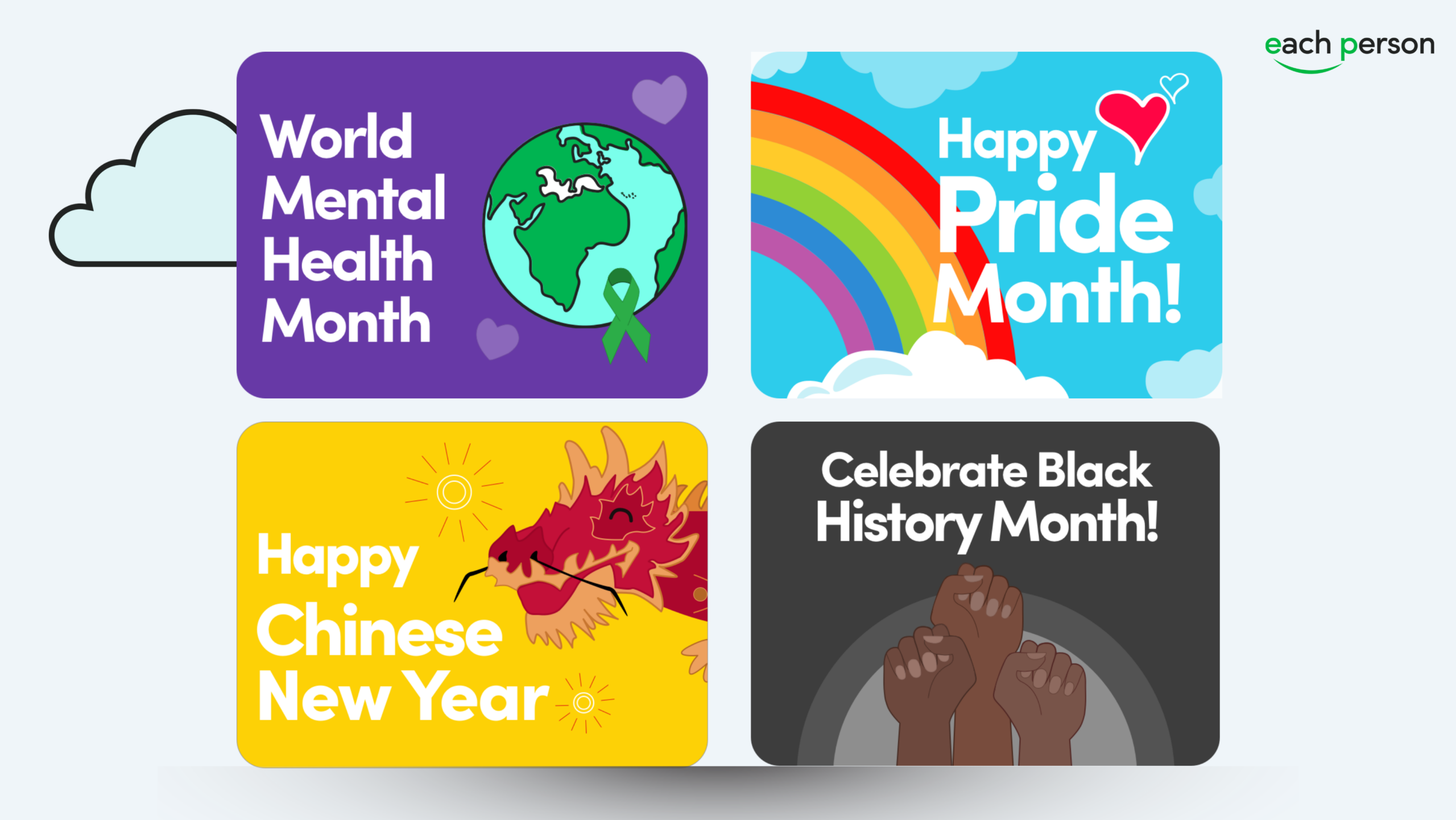
When organisations discuss Equality, Diversity, and Inclusion, they often focus on the biggest awareness days, the most visible campaigns, and the conversations that are already familiar.
But real inclusion is not limited to headline moments.
It develops in everyday situations, depending on whether people feel recognised, respected, and represented at work.
A meaningful approach to Equality, Diversity, and Inclusion asks a bigger question: Do people feel seen for who they are, not just during the most visible moments, but throughout the year?
Inclusion is rarely created through one-off activities. More often, it grows from small, consistent signals that show people they belong.
Equality, Diversity, and Inclusion means recognising the full picture
A thoughtful EDI approach looks past the most familiar dates on the calendar.
It means recognising the full range of identities, beliefs, traditions, and experiences within your team.
This might include:
• cultural and religious traditions
• different family structures
• age and life stage
• geography and local context
• neurodiversity
• socio-economic background
• personal preferences around how people want to be recognised
This is when Equality, Diversity, and Inclusion becomes real, not as a campaign, but as a daily practice of paying attention to people in a more human way.
Woosh Raza, Founder & Principle Consultant at Into the Orbit Consulting, highlights, “Belonging is much more than recognition during cultural awareness dates. This is one part of a much larger picture for valuing difference so that everyone can thrive in the workplace. Trust is built through consistent actions and thoughtfulness built over a period of time, and is rooted in small actions every day.”
Belonging often comes from small signals.
A sense of belonging rarely comes from broad statements alone.
More often, it comes from quieter moments like these:
• Was something meaningful to me acknowledged?
• Did that recognition feel relevant?
• Did I have a say in how I was included?
These are small questions, but they reveal something important. People do not just want to be included in principle: they want inclusion to feel thoughtful, relevant, and personal.
This is often where Equality, Diversity, and Inclusion efforts either succeed or fall short. For many HR and internal communications teams, this is also a capacity challenge. Even with the best intentions, it is not always easy to keep up with the full range of moments, identities, and experiences that matter across a workforce. There can also be understandable hesitation about getting it wrong, whether that means missing an important occasion, using the wrong language, or approaching recognition in a way that feels superficial rather than thoughtful.
A more considered way to support people
If organisations want EDI to feel real, it is not just about saying the right things. It is about recognising people for who they are, not only during the biggest moments, but in everyday life.
This means going beyond performative gestures and thinking more carefully about relevance, context, and choice. What matters to one person may not matter to another. What feels inclusive in one setting may feel impersonal in another.
A better approach recognises that people’s experiences are not all the same.
It recognises that belonging is often built through small acts of consideration, such as noticing, respecting, and handling with care something important to a person.
That thinking underpins our Inclusion Calendar.
We created it to help organisations recognise cultural and religious moments in a way that feels more personal, thoughtful, and meaningful to each person. It is not meant as a box-ticking exercise, but as part of a more thoughtful approach to inclusion throughout the year.
Matt Norbury, CEO of Each Person, shares, “The challenge isn’t knowing that inclusion matters. It’s building it into everyday working life in a way that feels thoughtful, relevant, and genuine to different people. We’re proud to be building a market-first approach that helps make that part of everyday working life.”
For teams exploring how this can work in practice, our EDI Calendar is designed to support a more thoughtful, year-round approach to recognising what matters to people.
About Each Person
Each Person is a trusted wellbeing, recognition and benefits platform that helps organisations create healthier, more engaged and better supported teams. By combining recognition, financial wellbeing and everyday support in one place, we make it easier to care for people in a more meaningful, connected way.
For additional information, please contact us at support@eachperson.com