Humans of HR

Theme Park HR

by Simon Kent | Feb 19, 2026

Having started out in hotel management in Switzerland, Bruno Fournet was expecting a career in general management level in some of the worlds’ biggest hotel groups. However, new opportunities arose from an interesting project which emerged to bring Disneyland to Europe – and it made him think twice. Consequently, he joined Disneyland Paris as a project manager and has now spent 34 years at the company, working across the then new and now established resort, rising eventually to his current position of HR Director – Learning & Development.

“My original role was linked to the hotel,” Bruno admits. “But I moved around a lot, from general services, security, project management and then, 15 years ago, into HR.” Even in HR he covered many different roles – health and safety, employee housing, operations training, assuming his current position five years ago.

Broadening experience

He’s been open to new challenges and positions within the business across his time at Disneyland Paris, and notes this isn’t something everyone would do. While others have stayed in their line of business, he has chosen to take on new projects and challenges wherever they may lie. Some of those challenges – such as preparing for the opening of the resort’s hotel – were directly linked to his past career, but others were entirely new and have broadened his experience of working for the business and his understanding of how a company of that size and type operates.

It’s an element which has stood him in good stead with colleagues as he’s undertaken subsequent HR tasks: On the one hand the people he works with know that he understands what it’s like to be working on the frontline (and elsewhere) in the business. On the other hand it has informed his own approach to the HR function.

I understood that it was paramount for leaders to keep up to date with the latest skills and developments in their areas.”

Bruno’s view from his current position is that it’s not just about training people but also about developing great leaders. He feels his own experience has effectively guided him to work towards his full potential, addressing certain aspects of his skills, undergoing training and building experience before moving forward with more responsibility. Throughout this development he has appreciated the time he’s been given to achieve more: “I always had the time to develop myself through projects and assignments,” he says. “I understood that it was paramount for leaders to keep up to date with the latest skills and developments in their areas.” Unsurprising then that when Bruno made the move from operations into HR he took an HR course with a Paris business school in order catch up with the key concepts he required.
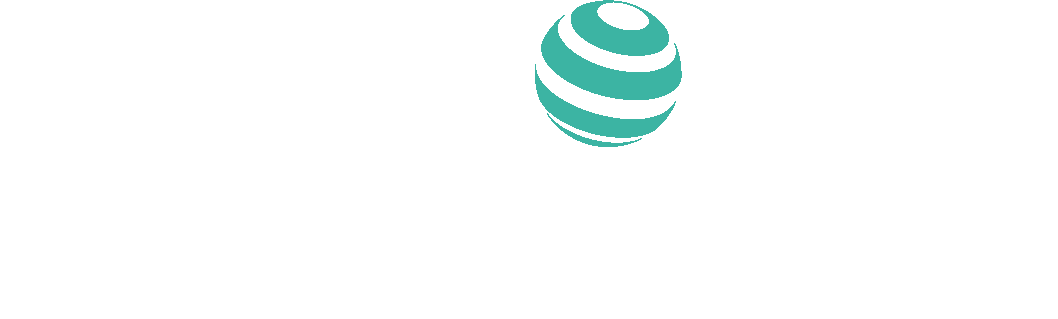

“When I was a manager in operations, I understood my performance was the result of being one of a team,” he explains.

“So I needed an engaged team with the required skills for us to perform well. I felt HR needed to understand better what was required within the business – they needed to understand better the stakes and the context in which people are working, and then they can ask how can we efficiently support you?”

For Bruno getting this right means understanding the mindset of the person they have to support, train or develop. “Yes, we are experts in the way of HR policies,” he says, “but we also need to know about our internal clients (operations, marketing, finance, etc.). If we understand those then we can invent an HR initiative or see if there’s something ‘on the shelf’ that could be relevant.”

Bruno notes this understanding even needs to apply when introducing more stringent policies such as those around employment regulation. HR may need to take time explaining how and why regulations must be applied and followed, but they also need to listen to operations – or wherever their client might be – to understand how they work. A training intervention, for example, should reflect business strategy and through that HR can determine how the training should be built, what outcomes should be looked for and to what timeline they can deliver. The intervention can then be tested through pilot schemes and so forth and it can be introduced across the business alongside further checks to make sure it has the right impact.

“At the end of the project we go back to the original person who requested the intervention and say did it do what you wanted it to do? Do you have KPIs so we can confirm it worked and how can we adjust it?” notes Bruno.

Bringing an American institution to Europe has had its repercussions from the point of view of company culture. According to Bruno this hasn’t been a simple transplantation of how things are done in America, adapted to the rules and regulations of France. Areas such as the induction process, featuring a days’ orientation including the history of the company and so forth didn’t resonate for the local workforce as it did for those joining in America. So while there are certain aspects of the resort which are run according to their US owner, the business has enough autonomy to achieve success, to recruit, support and develop motivated and skilled employees in the way that works for them.

The importance of autonomy

“Autonomy is one of my drivers,” confesses Bruno explaining how he and his colleagues have the bandwidth to be able to introduce their own ideas and approaches wherever it seems best to do so.

AI implementation, for example, is on the cards for HR as well as other parts of the business and Bruno is predicting the resulting transformation of the company will be supported and guided by his function.

“Introducing AI will force our leaders to rethink the HR organisation,” Bruno confirms. “AI will remove some of the administrative burden, giving us more time and energy to support people – just like when we introduced traditional digital tools into the company.”

Bruno is positive about the impact of AI overall, and that seems to add to his feeling that now is a good time to be in the function.

People engagement is key to the business’ performance.”

It seems unlikely that Bruno will move on from Disneyland. “The company is developing many new ideas, new experiences and new projects”, he says reflecting on the way this will build in variety and new challenges for himself. “We understand that people engagement is key to the business’ performance,” he adds “not just about a show’s performance but about guest satisfaction as well.” Bruno emphasises the importance of the relationship between guests and employees – noting that employee who go a little further – being gentle with a child, recognising and making a fuss of birthdays – can really make a difference for their visitors’ enjoyment.

As part of helping to deliver this, Bruno and his colleagues will continue to recognise the importance of investing in those employees, making sure they are well looked after, properly led, developing the skills they need and becoming more engaged. “What we’re doing makes full sense for me,” he says, “and there’s a real desire to take it further.”

Related Content

Always Say Yes

With a career that has led her through recruitment and across multiple business functions and diverse businesses, Gillian Mahon Group CPPO at Totalmobile Ltd shows how HR can lead from the top as her business develops and evolves.

read more...